What Does the New UK-South Korea Trade Deal Mean for Businesses?
Published: 2025-12-15 23:00:07 | Category: technology
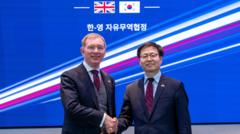
The UK and South Korea have finalised a significant trade deal aimed at bolstering economic ties and creating thousands of jobs, with British industries such as pharmaceuticals, automotive, alcohol, and financial services poised to benefit from an extension of tariff-free access to most goods and services. This agreement, announced by Trade Minister Chris Bryant in London, will protect £2 billion worth of UK exports from potential tariff increases and aims to enhance cooperation between the two nations.
Last updated: 13 October 2023 (BST)
What’s happening now
The UK government has reached a new trade agreement with South Korea that extends tariff-free trade for 98% of goods and services. This deal is crucial as it not only safeguards existing trade relations but also aims to foster economic growth by reducing non-tariff barriers and enhancing protections for key UK industries. The agreement comes as the Labour government continues to build a network of trade partnerships post-Brexit, although previous deals with larger partners like the EU and the US have yet to show substantial impacts on the UK economy. Prime Minister Keir Starmer heralded the agreement as a significant boost for British business, emphasising its potential to create jobs and stimulate growth across the nation.
Key takeaways
- The trade deal will maintain 98% tariff-free access to goods and services between the UK and South Korea.
- It protects £2 billion of UK exports from increases in tariffs, which were set to rise in January 2026.
- Trade Minister Chris Bryant and South Korean Minister Yeo Han-koo announced the deal, highlighting its focus on reducing non-tariff barriers.
- The agreement is seen as a strategic partnership, positioning the UK as a gateway for South Korean trade with Europe.
- Despite the deal, previous trade agreements have not significantly impacted the UK economy, according to the Office for Budget Responsibility (OBR).
Timeline: how we got here
The journey towards this trade agreement has been marked by several key milestones:
- January 2021: The UK formally leaves the EU, prompting the need for new trade agreements.
- May 2022: The UK and South Korea sign a temporary trade agreement to maintain existing terms post-Brexit.
- April 2023: Trade talks between the UK and South Korea begin to establish a more comprehensive agreement.
- October 2023: The UK government finalises the new trade deal, announced by Minister Bryant in London.
What’s new vs what’s known
New today/this week
The recent trade agreement secures ongoing tariff-free access for 98% of UK goods and services to South Korea, a crucial market for British exports. This is seen as a strategic enhancement to the UK's trading framework, particularly as it aims to strengthen economic ties post-Brexit.
What was already established
Prior to this deal, the UK had a temporary arrangement with South Korea that was set to expire in early 2026. The new agreement builds on these existing terms, aiming to further reduce non-tariff barriers and enhance cooperation in digital and investment protections, which were already being discussed as part of ongoing trade relations.
Impact for the UK
Consumers and households
For UK consumers, the deal is expected to maintain the current pricing of goods imported from South Korea, including electronics and cosmetics. As South Korean culture continues to gain popularity in the UK, particularly in music and food, consumers may see a broader range of products and potentially lower prices due to reduced trade barriers.
Businesses and jobs
Businesses in sectors such as automotive, pharmaceuticals, and alcohol are likely to experience improved access to the South Korean market. This could lead to increased job creation, particularly in manufacturing and exports. Companies like Bentley Motors and Diageo have already expressed positive sentiments regarding the agreement, anticipating growth in their respective markets.
Policy and regulation
The deal is part of the Labour government's broader strategy to solidify trade relationships post-Brexit. Upcoming consultations may focus on how to implement the new regulations efficiently. Moreover, the government aims to eliminate red tape for small businesses, which could enhance their competitiveness in international markets.
Numbers that matter
- 98% of trade between the UK and South Korea will remain tariff-free.
- £2 billion worth of UK exports will be protected from tariff increases.
- In the 12 months to June 2023, UK exports to South Korea fell by 16.4%.
- South Korea accounted for 0.8% of the UK’s total trade during that same period.
- India, the UK’s 10th largest trading partner, is projected to increase GDP by only 0.11% to 0.14% under its new trade agreement with the UK.
Definitions and jargon buster
- Tariff: A tax imposed on imported goods, which can affect pricing and trade flows.
- Non-tariff barriers: Regulatory or procedural barriers to trade that do not involve tariffs, such as quotas, import licenses, and standards.
- GDP: Gross Domestic Product, a measure of the economic performance of a country.
- OBR: Office for Budget Responsibility, an independent body that provides economic forecasts and analysis for the UK government.
How to think about the next steps
Near term (0–4 weeks)
In the immediate future, businesses will need to assess how the new trade deal will affect their operations. Companies should begin strategising on how to leverage the tariff-free access to enhance their exports to South Korea. Consumers may also notice a gradual increase in the availability of South Korean products in UK markets.
Medium term (1–6 months)
As the government rolls out the implementation of the agreement, businesses may see changes in regulatory processes that could facilitate smoother trade. It will be vital for companies to stay informed about any new regulations and how they affect market access.
Signals to watch
- Changes in export and import figures between the UK and South Korea in the coming quarters.
- Feedback from businesses regarding the practical impacts of the new trade deal.
- Updates from the government on the progress of implementing the trade agreement.
Practical guidance
Do
- Monitor changes in trade regulations and tariffs to make informed business decisions.
- Explore new markets in South Korea for your products and services.
- Engage with trade organisations to understand the implications of the agreement.
Don’t
- Assume that all trade barriers have been eliminated; verify specific regulations that may still apply.
- Neglect to update your export strategy based on the new trade landscape.
- Overlook the importance of adapting marketing strategies to cater to South Korean consumers’ preferences.
Checklist
- Review your product compliance with South Korean regulations.
- Assess market demand for your goods in South Korea.
- Connect with local distributors in South Korea to facilitate market entry.
- Stay updated on economic forecasts and trade data related to South Korea.
- Engage with government resources to understand support available for exporters.
Risks, caveats, and uncertainties
While the new trade deal with South Korea presents opportunities, there are uncertainties surrounding its long-term impact. Previous trade agreements have not yielded significant benefits, as highlighted by the OBR's projections. Additionally, the decline in trade between the UK and South Korea in recent months raises questions about market dynamics and the effectiveness of the agreement in revitalising trade flows. Businesses should consider these factors and remain cautious as they navigate the evolving trade landscape.
Bottom line
The new trade agreement between the UK and South Korea represents a strategic move to strengthen economic ties and protect UK exports. While the government promotes the deal as a pathway to job creation and economic growth, the actual impacts remain to be seen, especially in light of previous trade agreements that have not significantly influenced the economy. Businesses and policymakers alike must remain vigilant in tracking the effects of this deal on trade dynamics and economic performance.
FAQs
What are the main benefits of the UK-South Korea trade deal?
The trade deal allows for 98% of goods and services to remain tariff-free, protecting £2 billion of UK exports from potential tariff increases. This is expected to create jobs and support economic growth in various British industries.
How will the trade deal affect UK consumers?
UK consumers may benefit from continued access to South Korean products at stable prices, as the deal aims to reduce trade barriers. This could lead to a greater variety of goods, including electronics and cosmetics, in UK markets.
What should businesses do following the agreement?
Businesses should review their export strategies, assess compliance with South Korean regulations, and explore new market opportunities to leverage the benefits of the trade deal effectively.