Will China's Military Drills Around Taiwan Signal a Warning to Separatists?
Published: 2025-12-29 04:00:08 | Category: world
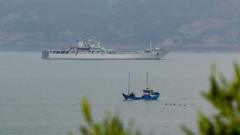
China's announcement of military drills around Taiwan, codenamed "Justice Mission 2025," simulates the seizure and blockade of key areas in a show of force amid escalating tensions with the island. The drills, scheduled for Tuesday, follow the US's recent arms sale to Taiwan worth £8.2 billion, provoking sharp protests from Beijing. This situation underscores the ongoing military and political friction in the region, as Taiwan's defence ministry remains on high alert in response to China's activities.
Last updated: 24 October 2023 (BST)
What’s happening now
The Chinese military is set to conduct extensive drills around Taiwan, involving all branches of its armed forces, including live-fire exercises. This move is positioned as a response to what China perceives as provocations from Taiwan and its allies, particularly the United States. With the drills scheduled just days after the US announced a significant arms package to Taiwan, the exercises are viewed as a direct warning against Taiwanese "separatist forces." Taiwan's government has condemned these drills, asserting that they violate international norms.
Key takeaways
- China's "Justice Mission 2025" drills will simulate the seizure and blockade of Taiwan.
- The exercises follow a substantial US arms sale to Taiwan, escalating tensions further.
- Taiwan remains on high alert, monitoring Chinese military movements closely.
Timeline: how we got here
Recent tensions have developed as follows:
- October 2021: Increased military drills by China around Taiwan begin, prompted by Taiwan's growing ties with the US.
- August 2022: Following Nancy Pelosi's visit to Taiwan, China conducts large-scale military exercises in the Taiwan Strait.
- October 2023: The US announces an arms deal with Taiwan worth £8.2 billion, prompting a strong backlash from Beijing.
- 24 October 2023: China announces "Justice Mission 2025" military drills set to occur imminently.
What’s new vs what’s known
New today/this week
The imminent military drills represent a significant escalation in China's military posturing. They are designed to showcase China’s capabilities and send a clear message to Taiwan and its allies. The drills involve a comprehensive display of military might, including air, naval, and ground forces, and are a direct reaction to perceived threats from Taiwan’s recent military enhancements.
What was already established
China's long-standing claim over Taiwan has led to numerous military exercises in the Taiwan Strait, particularly in response to actions by Taiwan’s government or visits from US officials. The Taiwanese government has consistently maintained its sovereignty and has been increasing its defence spending to counteract perceived threats from Beijing.
Impact for the UK
Consumers and households
The ongoing tensions in the Taiwan Strait could have indirect effects on UK consumers, particularly if military actions disrupt global supply chains, especially in technology and electronics where Taiwan plays a crucial role. Increased military tensions can lead to fluctuations in commodity prices, affecting household bills and consumer goods.
Businesses and jobs
UK businesses with ties to Taiwan or those reliant on Taiwanese technology may face uncertainty. Potential disruptions in supply chains could impact sectors ranging from electronics to automotive manufacturing, prompting companies to rethink their sourcing strategies. Job stability in these sectors could be threatened if tensions escalate into conflict.
Policy and regulation
The UK government may need to reassess its diplomatic and trade policies regarding both China and Taiwan. Increased military activity by China could lead to calls for stronger support for Taiwan from the UK, alongside a careful navigation of trade relations with Beijing to avoid economic repercussions.
Numbers that matter
- £8.2 billion: The value of the recent US arms package to Taiwan.
- 2022: Over 200 military drills conducted by China in response to perceived threats from Taiwan.
- 10 days: Duration of Taiwan’s largest military exercise, Han Kuang, held earlier this year.
Definitions and jargon buster
- PLA: People’s Liberation Army, the combined military forces of China.
- Separatist forces: Groups or individuals advocating for Taiwan's independence from China.
- Live-fire exercises: Military drills involving the use of live ammunition.
How to think about the next steps
Near term (0–4 weeks)
In the immediate future, monitor the situation closely, particularly any changes in military activity around Taiwan and responses from the international community. Watch for updates on the drills and any subsequent military actions from either side.
Medium term (1–6 months)
Over the next few months, anticipate potential shifts in international relations, particularly regarding US-China tensions and how they may affect UK interests. Watch for Taiwan's defence measures and any new policies introduced by both China and the US.
Signals to watch
- Statements from the Chinese military regarding the outcomes of the drills.
- Reactions from Taiwan and the US following the military exercises.
- Changes in the movement of military assets in the region.
Practical guidance
Do
- Stay informed about the developments in the Taiwan Strait.
- Consider diversifying supply chains if your business is dependent on Taiwanese products.
- Engage with local representatives to understand potential impacts on policy.
Don’t
- Ignore the implications of rising tensions on global markets.
- Underestimate the importance of diplomatic communication.
- Dismiss the potential for escalation into conflict.
Checklist
- Review your business's exposure to Taiwanese imports.
- Stay updated on government advisories regarding travel to the region.
- Engage in discussions about regional security with stakeholders.
Risks, caveats, and uncertainties
While the situation remains fluid, there are significant uncertainties surrounding the effectiveness of the military drills and their impact on international relations. The risk of miscalculation from either side could lead to heightened tensions or conflict. Additionally, the geopolitical landscape may shift rapidly depending on responses from the US and other allies of Taiwan.
Bottom line
The upcoming military drills by China around Taiwan underscore the escalating tensions in the region, particularly in light of recent US arms sales to Taiwan. As both sides prepare for potential confrontations, the implications for global supply chains and diplomatic relations are significant. It is essential for stakeholders, particularly in the UK, to remain vigilant and responsive to developments in the Taiwan Strait.
FAQs
What is the purpose of China's military drills around Taiwan?
The military drills, codenamed "Justice Mission 2025," aim to simulate the seizure and blockade of Taiwan as a warning against perceived separatist forces, particularly following recent US arms sales to the island.
How is Taiwan responding to the military exercises?
Taiwan has condemned the upcoming drills, describing them as a challenge to international norms. The Taiwanese defence ministry has heightened alert levels and is monitoring Chinese military movements closely.
What are the potential consequences of the increased tensions?
Increased tensions could lead to disruptions in global supply chains, particularly in technology and electronics, and may prompt shifts in UK diplomatic and trade policies regarding China and Taiwan.