Will Asylum Seeker Barracks Plans Be Delayed Again?
Published: 2026-02-06 08:00:28 | Category: sport
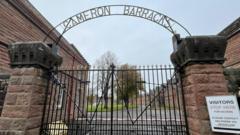
Concerns over planning rules could further delay the Home Office's plans to house approximately 300 asylum seekers at Cameron Barracks in Inverness, Scotland. Under Scottish law, the local Highland Council must approve a change of use for the site, complicating the government's timeline for relocation.
Last updated: 09 October 2023 (BST)
What’s happening now
The Home Office's initiative to accommodate asylum seekers at Cameron Barracks has met significant regulatory hurdles. Independent MSP Fergus Ewing and Conservative MSP Edward Mountain have highlighted the necessity for Highland Council to grant planning permission for the barracks to be repurposed as a hostel, especially if the Home Office intends to use the site for longer than six months. Currently, the Home Office is assessing the suitability of the barracks, which was initially intended to house asylum seekers by early December 2023.
Key takeaways
- The Home Office plans to house about 300 asylum seekers at Cameron Barracks.
- Highland Council must approve a change of use for the barracks, complicating timelines.
- Concerns from local communities regarding safety and planning permissions are prevalent.
Timeline: how we got here
The discussions around Cameron Barracks have unfolded over several weeks:
- September 2023: Home Office announces plans to relocate asylum seekers to Cameron Barracks.
- Early October 2023: Local MSPs raise concerns about planning regulations and community safety.
- Early December 2023: Proposed timeline for relocation of asylum seekers.
What’s new vs what’s known
New today/this week
Recent discussions indicate that the Home Office is reassessing plans for Cameron Barracks and has yet to submit an application for a House in Multiple Occupation (HMO) licence. Local authorities have not received any formal request for planning permission either, leading to uncertainty regarding the timeline for housing asylum seekers.
What was already established
It was previously confirmed that under Scottish law, a change of use from military barracks to hostel requires local council approval. Ewing and Mountain pointed out that the rules differ significantly from those in England, where such changes can be implemented more swiftly.
Impact for the UK
Consumers and households
Asylum seeker accommodation plans can impact local communities by potentially increasing demand for resources, services, and safety measures. Residents of Inverness have expressed concerns over community safety, complicating the integration of asylum seekers into the local population.
Businesses and jobs
Local businesses may face challenges as community tensions rise. While some may benefit from increased economic activity due to an influx of asylum seekers, others could experience negative repercussions from community backlash.
Policy and regulation
The UK government's approach to asylum accommodation is under scrutiny. The insistence on using military bases like Cameron Barracks is part of a broader strategy to manage the increasing number of asylum seekers and cut costs associated with housing them in hotels. Regulatory hurdles could derail these plans, prompting the government to seek alternative solutions or locations.
Numbers that matter
- 300: Number of asylum seekers intended to be housed at Cameron Barracks.
- 6 months: Duration allowed for emergency use of premises without planning permission in Scotland.
- 3 years: Typical duration of an HMO licence in Scotland.
Definitions and jargon buster
- HMO (House in Multiple Occupation): A property rented out to at least three unrelated individuals who share facilities such as bathrooms and kitchens.
How to think about the next steps
Near term (0–4 weeks)
Highland Council will need to clarify whether planning permission is required and whether an HMO licence application will be submitted by the Home Office. Community meetings may be held to address local concerns.
Medium term (1–6 months)
The Home Office will need to navigate the planning process promptly to meet its intended timeline for housing asylum seekers by early December 2023. Ongoing discussions with local authorities will be crucial in determining the next steps.
Signals to watch
- Updates from Highland Council regarding planning permissions or HMO applications.
- Responses from the Home Office concerning community safety and integration measures.
- Public sentiment in Inverness regarding the accommodation of asylum seekers.
Practical guidance
Do
- Stay informed about local government decisions regarding planning permission.
- Engage in community discussions about the implications of housing asylum seekers.
Don’t
- Jump to conclusions about asylum seekers based on misinformation or stereotypes.
- Ignore community concerns; they can shape decision-making processes.
Checklist
- Check local news for updates on planning permissions related to Cameron Barracks.
- Attend community meetings to voice concerns or support.
- Understand the legal framework surrounding HMOs and planning in Scotland.
Risks, caveats, and uncertainties
There are significant uncertainties surrounding the use of Cameron Barracks, primarily due to the need for planning permission under Scottish law. If the Home Office fails to secure this permission, the relocation plans may be delayed indefinitely. Additionally, community concerns over safety and integration could impact the broader discussion on asylum policy in Scotland.
Bottom line
The situation surrounding Cameron Barracks is complex, with planning regulations potentially stymying the Home Office's efforts to house asylum seekers. As developments unfold, it is crucial for local authorities, residents, and the government to engage in constructive dialogue to address community concerns while fulfilling legal requirements.
FAQs
Why does the Home Office need planning permission for Cameron Barracks?
Under Scottish law, a change of use from military barracks to a hostel requires planning permission if the site is to be used for longer than six months, which is a key consideration for the Home Office.
What is an HMO licence?
A House in Multiple Occupation (HMO) licence is required for properties rented out to multiple occupants who share facilities. This licence typically lasts for three years in Scotland.
How does the situation in Scotland differ from England regarding asylum accommodation?
In England, military barracks can be repurposed for asylum accommodation without needing planning permission for longer than six months, unlike the stricter regulations in Scotland.